
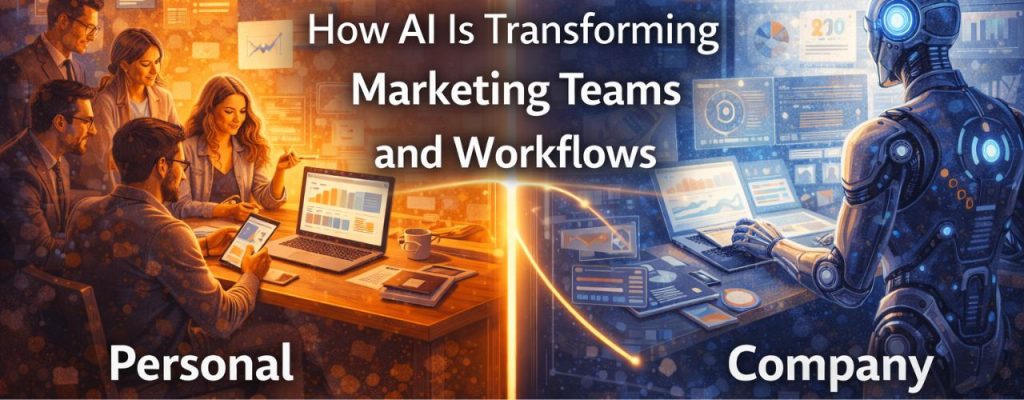
How AI Is Transforming Marketing Teams and Workflows
Artificial Intelligence (AI) is rapidly reshaping the way marketing teams operate. From content creation and data analysis to customer personalization and campaign optimization, AI tools are enabling marketers to work faster, smarter, and more efficiently. As businesses increasingly rely on digital channels to reach customers, AI is becoming a critical component of modern marketing strategies and workflows.
Rather than replacing marketers, AI is enhancing their capabilities by automating repetitive tasks, analyzing large datasets, and providing actionable insights. This transformation is allowing marketing teams to focus more on creativity, strategy, and customer relationships.
Smarter Data Analysis and Insights
One of the most significant ways AI is transforming marketing workflows is through advanced data analysis. Marketing teams generate massive amounts of data from websites, social media platforms, email campaigns, and customer interactions.
AI-powered analytics tools can quickly process this data to identify patterns, trends, and customer behaviors. Instead of spending hours manually analyzing reports, marketers can use AI insights to make faster and more informed decisions.
These insights help businesses understand which campaigns perform best, what type of content resonates with audiences, and where marketing budgets should be allocated for maximum impact.
Automated Content Creation and Optimization
Content creation is a core part of modern marketing, and AI is playing a growing role in this area. AI tools can assist with generating blog outlines, writing social media captions, suggesting headlines, and even creating personalized email content.
While human creativity remains essential, AI helps speed up the production process by handling repetitive writing tasks and providing optimization suggestions.
AI can also analyze search trends and keyword performance, helping marketers create content that aligns with what users are actively searching for online. This improves the chances of ranking higher in search engines and attracting organic traffic.
Personalized Customer Experiences
Personalization has become a major expectation for modern consumers. Customers want brands to understand their preferences and deliver relevant recommendations and messages.
AI makes this possible by analyzing customer behavior, purchase history, browsing patterns, and engagement data. Based on this information, AI systems can deliver personalized product recommendations, targeted advertisements, and customized email campaigns.
This level of personalization improves customer experiences and increases the likelihood of conversions.
Faster Campaign Optimization
Marketing campaigns traditionally required weeks of analysis before adjustments could be made. AI now enables real-time optimization by continuously monitoring campaign performance.
AI systems can automatically adjust ad targeting, budget allocation, and content variations to improve results. This allows marketing teams to respond quickly to changing audience behavior and market conditions.
As a result, campaigns become more efficient and generate better return on investment.
Improved Collaboration and Workflow Efficiency
AI is also improving internal marketing workflows. Many AI-powered tools integrate with project management platforms, customer relationship management (CRM) systems, and analytics dashboards.
This integration allows teams to collaborate more effectively and keep track of campaign progress, performance metrics, and deadlines in one place.
Automation also reduces the need for manual tasks such as data entry, report generation, and audience segmentation. Marketing teams can therefore focus more on strategic planning and creative development.
The Future of AI in Marketing
The role of AI in marketing will continue to grow as technology becomes more advanced. From predictive analytics to conversational AI and intelligent automation, businesses will have access to even more powerful tools that enhance marketing performance.
Organizations that embrace AI-driven workflows will gain a competitive advantage by making faster decisions, delivering better customer experiences, and improving marketing efficiency.
Ultimately, AI is not replacing marketers—it is empowering them to achieve more with less effort. By combining human creativity with AI-powered insights and automation, marketing teams can build smarter strategies and stronger connections with their audiences in the digital age.