
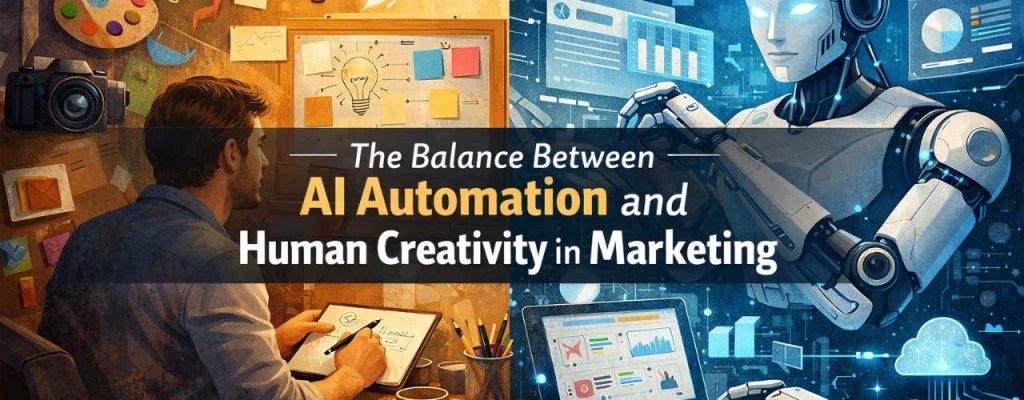
The Balance Between AI Automation and Human Creativity in Marketing
The marketing landscape is evolving rapidly, driven by the rise of artificial intelligence (AI) and advanced automation tools. From content generation to data analysis, AI is transforming how businesses operate and scale their marketing efforts. However, while automation offers speed and efficiency, human creativity remains essential for building meaningful connections with audiences. The real success in modern marketing lies in finding the right balance between AI automation and human insight.
The Power of AI in Marketing
AI has become a powerful asset for marketers. It can analyze large amounts of data, predict customer behavior, and automate repetitive tasks such as email campaigns, ad targeting, and content scheduling. These capabilities allow businesses to operate more efficiently and make data-driven decisions.
AI tools can also assist in content creation by generating ideas, outlines, and even draft content. This significantly reduces the time required to produce marketing materials, enabling teams to focus on strategy and execution.
In addition, AI-driven personalization helps businesses deliver targeted messages to specific audiences, improving engagement and conversion rates.
The Role of Human Creativity
Despite the advantages of AI, human creativity remains irreplaceable. Marketing is not just about delivering information—it’s about storytelling, emotions, and building trust. These elements require human understanding, empathy, and originality.
Human creativity allows brands to craft unique messages, develop compelling campaigns, and connect with audiences on a deeper level. It helps businesses stand out in a crowded digital space where automated content is becoming increasingly common.
Creative thinking also plays a crucial role in problem-solving, innovation, and adapting to changing market trends.
Why Balance Is Important
Relying entirely on AI can lead to generic and repetitive content that lacks personality. On the other hand, ignoring automation can make marketing processes slow and inefficient.
The key is to combine the strengths of both. AI can handle data-heavy and repetitive tasks, while humans focus on strategy, creativity, and emotional storytelling. This balance ensures that marketing efforts are both efficient and impactful.
For example, AI can identify trending topics and audience preferences, while human marketers can turn those insights into engaging and authentic content.
Practical Ways to Combine AI and Creativity
Businesses can adopt a hybrid approach by integrating AI tools into their workflows while maintaining human oversight. AI can be used for research, analytics, and initial content drafts, but final content should always be refined by human creators.
Marketers should focus on adding unique perspectives, real experiences, and brand voice to AI-assisted content. This approach ensures that the content remains original and valuable.
Collaboration between technology and human expertise can also lead to more innovative marketing strategies and better results.
The Future of Marketing
As AI technology continues to evolve, its role in marketing will only grow. However, audiences will increasingly seek authenticity and human connection in the content they consume.
Brands that successfully balance automation with creativity will have a competitive advantage. They will be able to produce high-quality content efficiently while maintaining a strong, relatable brand identity.
In the future, marketing will not be about choosing between AI and human creativity—it will be about using both together to create smarter, more effective, and more human-centered strategies.